
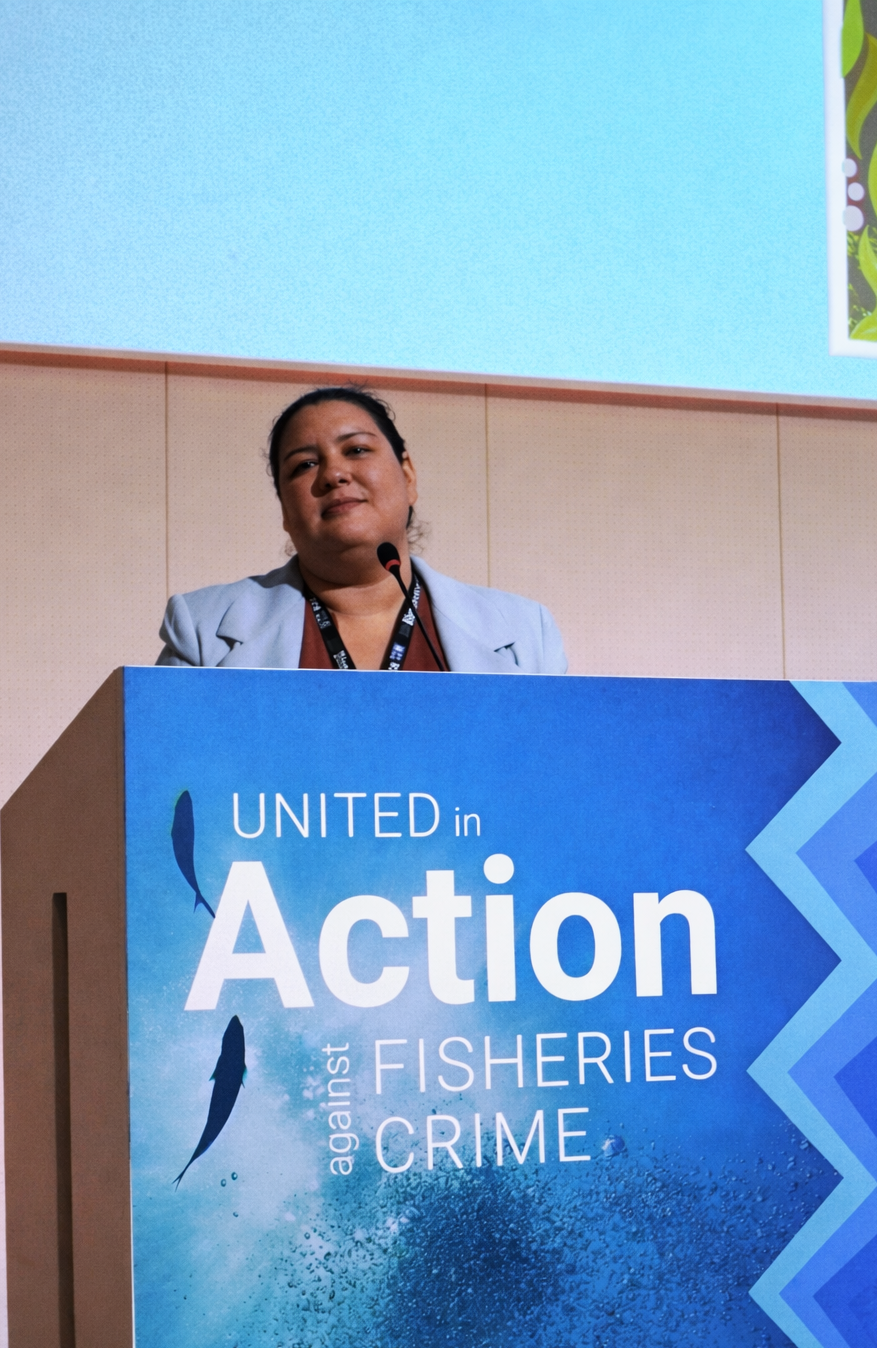
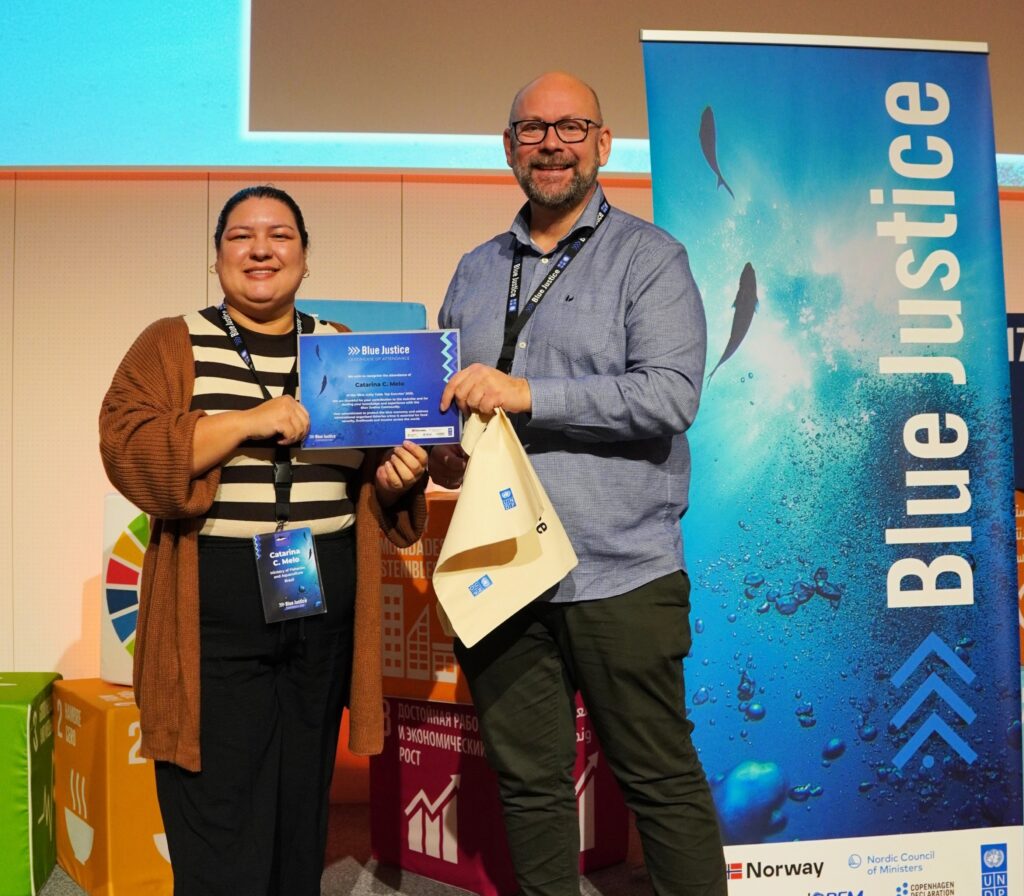
With a 19-agency coalition now in place and a renewed focus on maritime enforcement, Brazil is turning to the Blue Justice platform to strengthen its efforts against illegal, unreported, and unregulated fishing. Catarina Cardoso, General Coordinator for Research at the Ministry of Fisheries and Aquaculture, shares how the country plans to harness the initiative.
Brazil joined the Copenhagen Declaration on transnational organized crime in fisheries in 2021. Cardoso recently took on the role of Brazil’s focal point for Blue Justice, and attending the conference for the first time opened her eyes to what the platform could offer. The goal now is to bring the platform into active use within the coming months.
Cardoso is particularly interested in data on foreign-flagged vessels entering Brazilian waters, vessel concentrations, and potential transshipment activity. Conversations with colleagues from Cabo Verde, who use the platform to generate heat maps of vessel activity, sparked new ideas. “I want to bring that back home and say to my colleagues, we can do this too.”
A Broad Coalition
Brazil has assembled a substantial inter-agency working group dedicated to preventing IUU fishing. What began as a 14-agency initiative in 2021 has grown to 19 members, including the Navy, and the Ministries of Fisheries, Environment, Justice, Labor, and Ports.
“The main idea is to get everyone together to discuss the matters that we have in common regarding IUU fishing,” Cardoso says. The group held its first meeting in September 2025.
Beyond coordination, the working group serves as a space for agencies to share their own initiatives. Brazil already has a Memorandum of Understanding with Global Fishing Watch and participates in regional efforts focused on IUU fishing in Latin America. The ambition is to bring these threads together.
The Challenge of Scale
Brazil’s challenge is one of dimension. Its coastline is vast, its fishing fleet enormous, and its enforcement resources limited.
“To do the enforcement of our waters, we need a lot of people, we need a lot of vessels, and we do not have much of them,” Cardoso explains. As a result, Brazil concentrates efforts on areas where patterns indicate problems.
Why Blue Justice Matters
The Blue Justice platform offers access to AIS satellite data from Norwegian satellites—a valuable complement to Brazil’s existing vessel monitoring system. Not all vessels equipped with VMS carry AIS transponders, so combining the two datasets provides a fuller picture.
“As much data we have, it’s better to analyze and to see patterns,” Cardoso says. Targeted enforcement becomes possible. “We’re not going to search for every part of Brazil—we’re going to go directly to those parts that we see in the pattern in the platform.”
A Plan to Move Forward
Cardoso’s immediate priority is knowledge-sharing. Upon returning to Brazil, the plan is to present the platform to the full working group at a meeting scheduled for December or January. Blue Justice representatives will be invited to speak directly to Brazilian agencies.
“The first steps is to get more people to know and to get them to use the platform.”
Beyond awareness, Cardoso sees a need for capacity building, not just on how to navigate the platform, but on how to analyze the data it provides. “We have a good team that works with data in the ministry. I think they’re going to make very good use of the platform once they know how to use it.”
A Commitment to Act
When asked what support Brazil needs from Blue Justice, Cardoso’s response is pragmatic: continued presence and engagement. But the responsibility, Cardoso acknowledges, lies with Brazil.
“We need to start using the platform. Otherwise, Blue Justice cannot help us. Now it’s more on us.”