
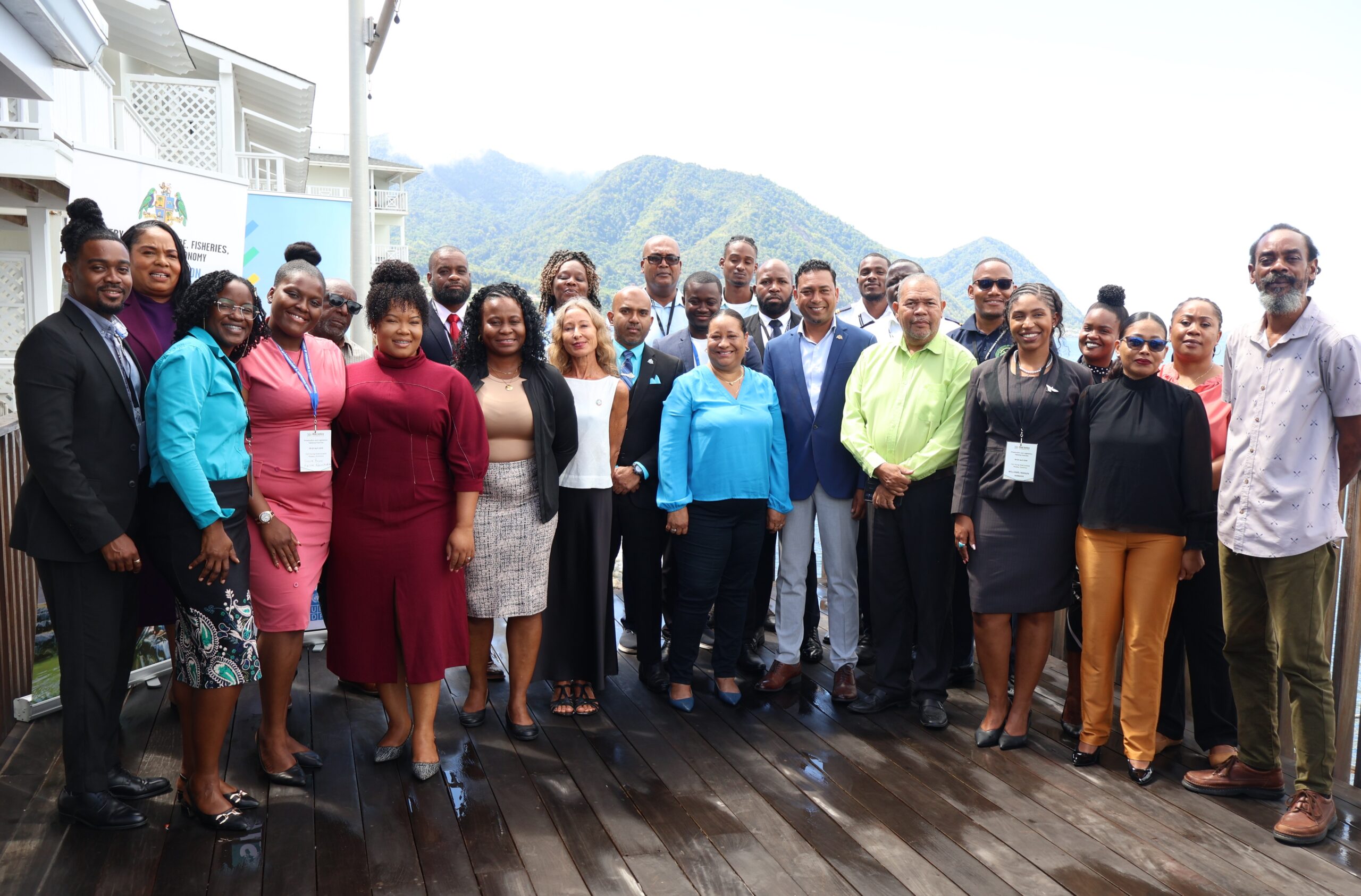
Roseau, Dominica | 29–30 April 2026
Government officials from across the Caribbean gathered in Dominica on 29–30 April 2026 for a regional Prosecution and Legislation Tabletop Exercise, focusing on how fisheries crime cases are investigated and prosecuted in practice, particularly where digital evidence and multiple agencies are involved.
A practical, case-based exercise
The exercise was convened under the Blue Justice Caribbean Hub (BJCH) in coordination with CARICOM IMPACS and with support from UNDP, funded by the Government of Norway through the Blue Justice Initiative. Participants from Dominica, Grenada, Jamaica and Barbados included representatives from fisheries authorities, prosecutors, police, customs, coast guard and maritime administration.
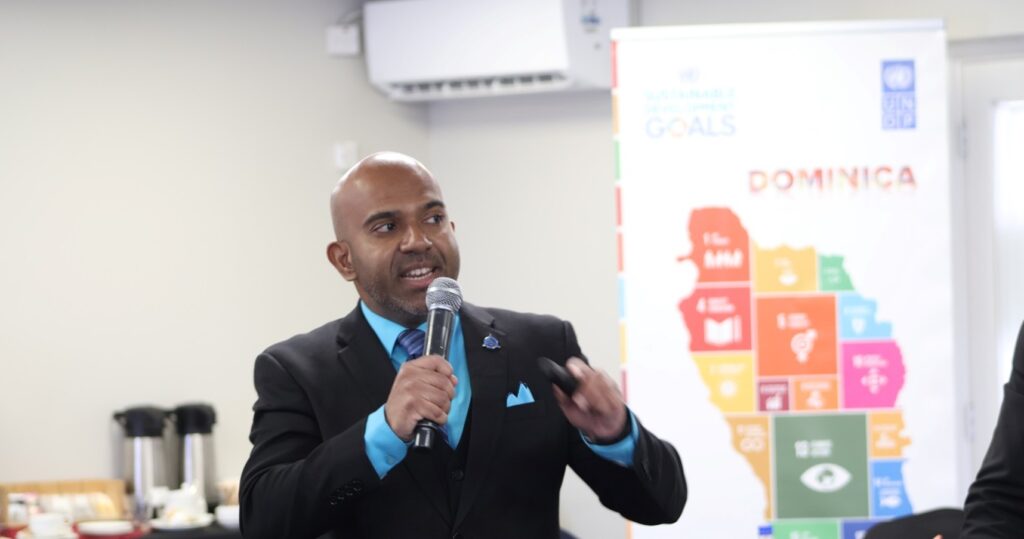
Photo: Zahra Oliphant
The two-day workshop used interactive scenario-based case studies designed by the CARICOM IMPACS Environmental Crime Unit with country input to walk participants through the full process, from detection and boarding to evidence handling and prosecution, with a particular focus on the legal use of digital evidence. The experience of CARICOM IMPACS in dealing with transnational organised crimes at the regional and global level provided valuable insight to participants and increased overall awareness of activities taking place in the maritime domain that affect the prosperity of Blue Justice Caribbean Hub countries.
Opening the workshop, Lieutenant Commander Leonard Wynter, representing the Blue Justice Caribbean Hub Secretariat, noted that the exercise was developed in direct response to country needs. “This workshop was requested directly by member states, reflecting strong regional ownership and priority,” Lt. Cmdr. Wynter said.
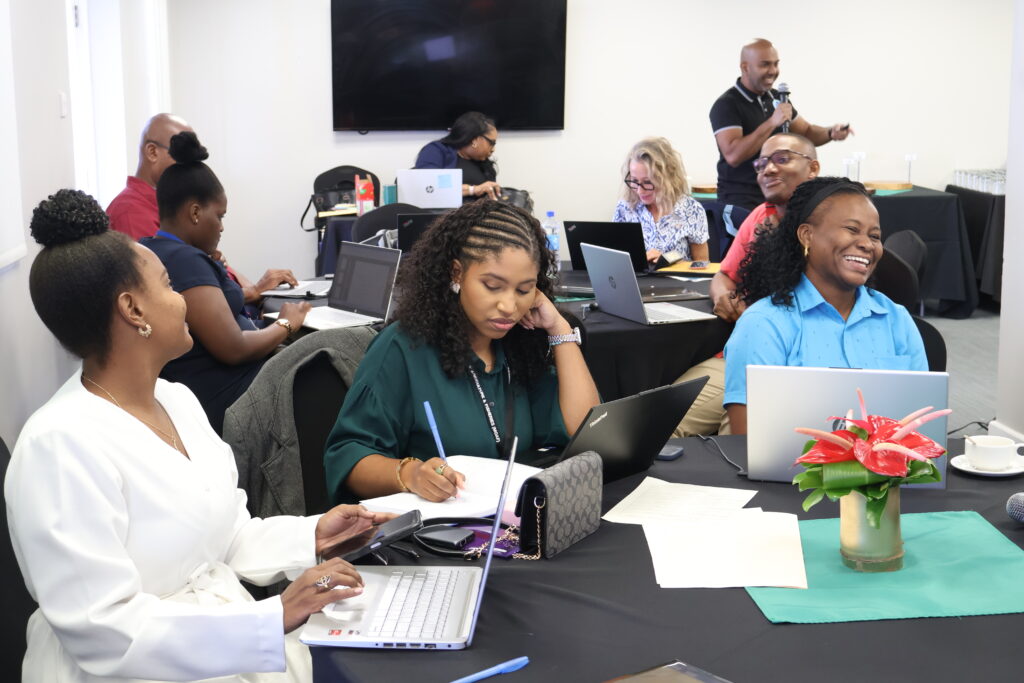
Photo: Zahra Oliphant
He added that the objective was “to explore the legal use and admissibility of electronic data, particularly AIS and VMS, in fisheries crime prosecutions across Blue Justice Caribbean Hub member countries.”
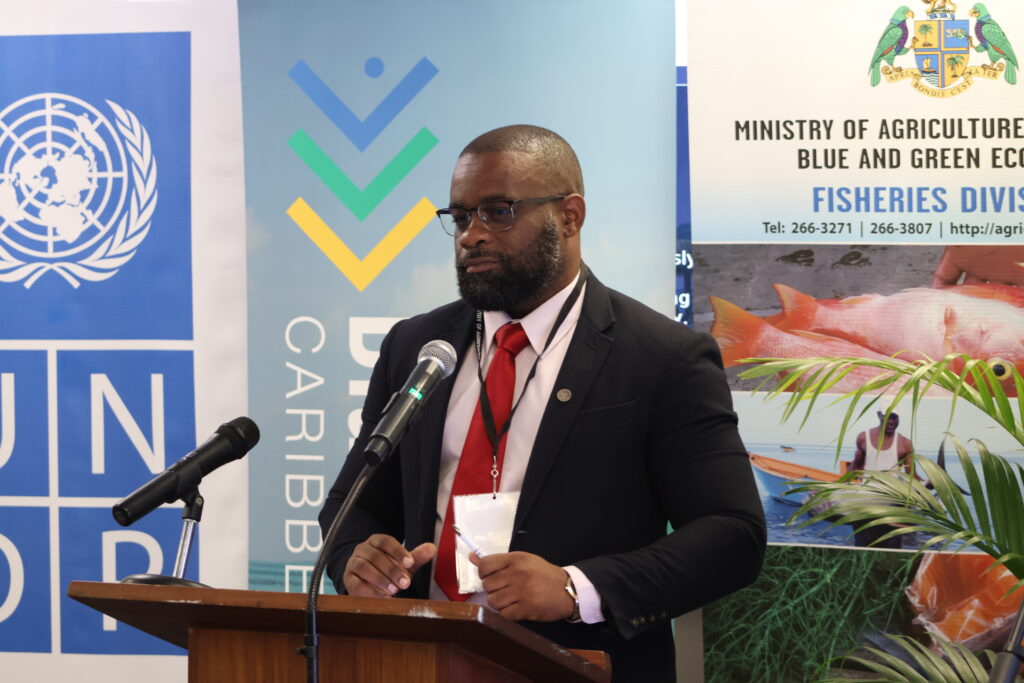
Photo: Zahra Oliphant
Focus on cooperation and real-world challenges
Rather than a theoretical discussion, the exercise was designed to reflect operational realities and day-to-day challenges faced by practitioners. Participants worked through cases involving multiple agencies and cross-border elements, comparing how different jurisdictions approach digital evidence, chain of custody, and prosecution strategies.
Lt. Cmdr. Wynter emphasized the format of the workshop, noting that “this exercise is not intended to be a top-down workshop. It is designed to be interactive, practical and participant-driven.”
Discussions highlighted common challenges across countries, including gaps in inter-agency coordination, differences in legal frameworks, and practical constraints in accessing and using digital data in court.
Regional collaboration through the Blue Justice framework
Speaking on behalf of UNDP Multi Country Office in Jamaica, Programme Analyst Jamaro Marville described the exercise as part of a broader regional effort to strengthen cooperation. “This workshop highlights our shared commitment across the Caribbean to strengthening how we collectively address fisheries crime,” he said.
He encouraged participants to engage actively and draw on the technical expertise present, noting the importance of continued collaboration across countries and agencies.
Strengthening governance and use of digital evidence
From a development perspective, the UNDP Blue Resilience Project highlighted the broader implications of fisheries crime for ocean-dependent countries.
“Fisheries crime poses a major sustainable development challenge, particularly for countries that depend on the ocean for food security, jobs and economic resilience,” said Dr. Emma Witbooi, Project Manager of the Global Blue Resilience Project.
“The operational use of digital data as evidence in fisheries crime prosecutions is at the core of what this workshop is about,” said Witbooi, noting that tools and Norwegian satellite data available through the Blue Justice Community support agencies in sharing and applying this data in practice.
She emphasized that the workshop focused on strengthening how digital data can be used in practice to support investigations and prosecutions, and on improving coordination between agencies involved in these cases.
National context and regional responsibility
As host country, Dominica framed the workshop within its broader priorities for the blue economy and sustainable resource management.
Hon. Jullan Defoe, Minister of State with responsibility for Fisheries and the Blue Economy, underlined the importance of marine resources to the country. “For Dominica, the ocean is not just a resource, it is part of who we are,” he said.
He also pointed to the wider regional context, noting that “the Caribbean Sea connects all of us, and the challenges we face do not stop at our borders.”
Defoe emphasized that addressing fisheries crime requires a broader approach beyond enforcement alone, including stronger legal frameworks, institutional coordination and regional cooperation.
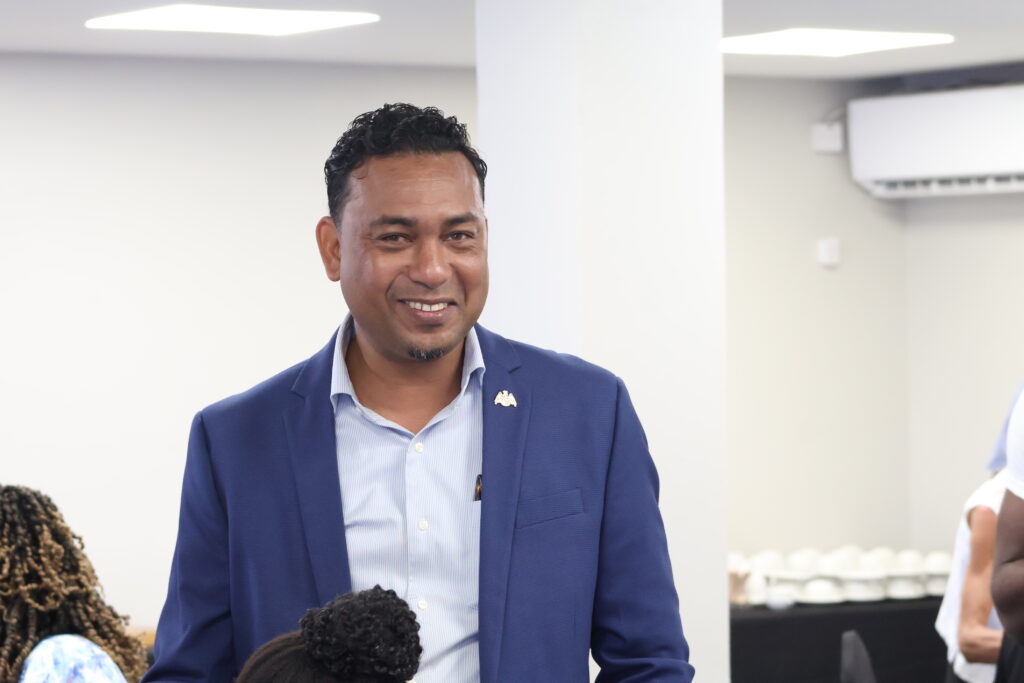
Photo: Zahra Oliphant
Looking ahead
The Dominica exercise builds on previous BJCH activities in the region and forms part of ongoing efforts to strengthen prosecution pathways and inter-agency cooperation. As Defoe noted in closing, “the real value of this workshop will be measured by what we do after we leave here.”
Outcomes from the exercise will inform follow-up actions at both national and regional levels, including continued work to strengthen coordination mechanisms, improved access to and use of digital evidence through the Blue Justice Community, and support for more effective regional responses to transnational organised crime in the fishing industry across the Caribbean.