
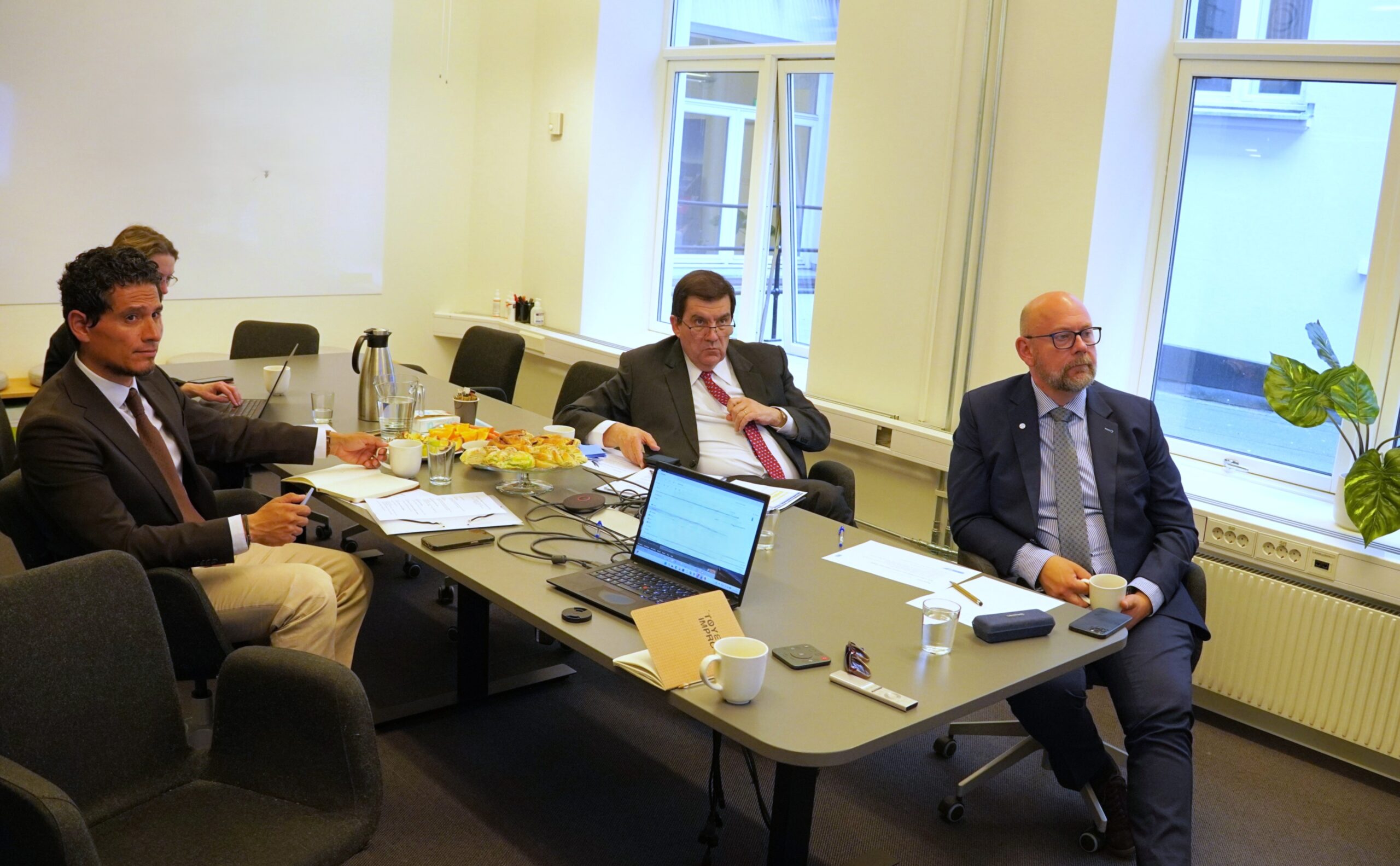
Representatives from the Government of Peru, the Embassy of Peru in Norway, the Blue Justice Secretariat, the United Nations Development Programme (UNDP), and the Blue Justice International Tracking Centre met on 27 May 2026 for a hybrid workshop hosted at the UNDP offices in Oslo. The meeting focused on strengthening cooperation on fisheries governance, maritime domain awareness, and inter-agency collaboration through the Blue Justice Initiative with UNDP support leveraging digital tools on the secure Blue Justice Community platform.
The workshop marked an important step in Peru’s engagement with the Blue Justice Initiative following its accession to the Copenhagen Declaration in 2025, providing an opportunity for representatives from multiple Peruvian agencies to explore practical tools and cooperation mechanisms to support fisheries governance and maritime domain awareness.
Opening the meeting, Ambassador Librado Orozco, General Director for Sovereignty, Boundaries, and Antarctic Affairs at Peru’s Ministry of Foreign Affairs, reaffirmed Peru’s commitment to the Blue Justice Initiative and highlighted the importance of strengthening cooperation across national institutions.
“This is a state policy that goes beyond changes of government. We’re going to have elections in the near future and this initiative goes beyond that. We want to give this a priority.”
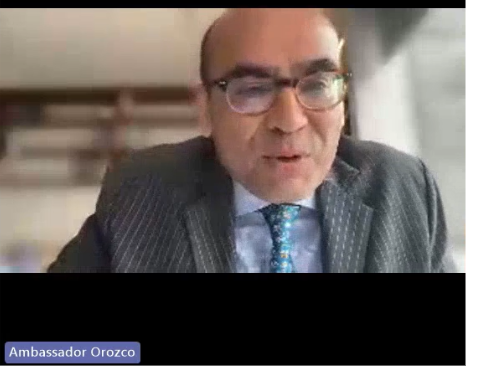
The Ambassador also underlined the importance of maritime governance and international cooperation in addressing fisheries crime and protecting the ocean.
“Peru reaffirms its commitment to this agenda through its accession in 2025 to the Copenhagen Declaration. This step reflects our determination to mount a collective and effective response to criminality in the fisheries sector.”
The workshop brought together representatives from a range of Peruvian authorities, including the Ministry of Foreign Affairs, Ministry of Production (PRODUCE), the General Directorate of Port Authorities and Coast Guard (DICAPI), the National Superintendency of Customs and Tax Administration (SUNAT), the Ministry of Justice and Human Rights, and the Ministry of the Interior.
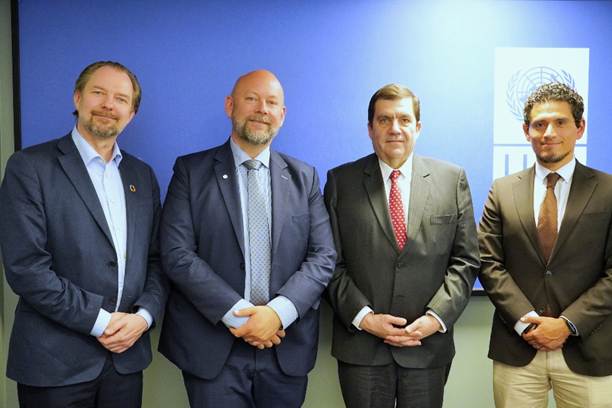
From left to right: Stian Olderkjær, UNDP Blue Resilience Project; Gunnar A. Stølsvik, Head of the Blue Justice Secretariat; Amb. Rolando Ruiz Rosas; and Julio Antonio Ubillús Ramírez, Deputy Chief of Mission at the Embassy of Peru in Norway.
During the meeting, Gunnar Stølsvik, Head of the Blue Justice Secretariat at the Norwegian Ministry of Trade, Industry and Fisheries, presented the background and objectives of the Blue Justice Initiative and the Copenhagen Declaration. He highlighted the importance of inter-agency and international cooperation in addressing organised crime linked to the fisheries sector.
“We are actually trying to protect the industry and the blue economy of the state so everybody can benefit from the riches of our oceans,” said Stølsvik.
He also emphasised the importance of practical cooperation between government agencies.
“When we look at it together, then our toolbox is much bigger than if we only look at it as a problem of illegal fishing,” he noted.
Emma Witbooi, Project Manager for the UNDP Blue Resilience Project, presented the UNDP support offer to parties of the Copenhagen Declaration countries through capacity building and training that fosters inter-agency coordination and peer-to-peer cooperation.
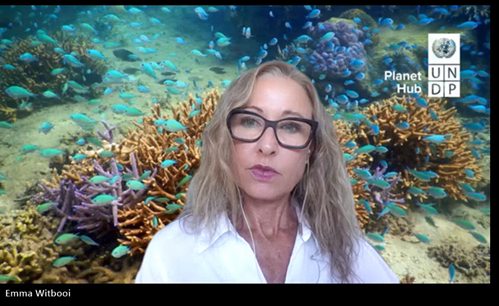
Screenshot from Teams
“We support countries in a manner that is tailored to what the countries need and we respond to regional realities and systems,” Witbooi said. “We focus very much on embedding sustainable inter-agency cooperation mechanisms.”
She also highlighted a number of practical results arising from UNDP support, as highlighted by practitioners who have participated in Blue Resilience inter-agency capacity building and training events.
“We’ve heard over and over again that there has been an increased ability of agencies to identify suspicious activity in their maritime domains and also to act on it,” she explained, along with improved information flow and strengthened trust and communication.
The Blue Justice International Tracking Centre also provided a live demonstration of the Blue Justice Community and GLISTRUP vessel tracking platform. The demonstration included an overview of the secure digital platform, multilingual functionality including Spanish language settings, vessel tracking features, and the use of Norwegian satellite AIS data to monitor vessel activity within and around Peru’s Exclusive Economic Zone. They also demonstrated how the platform can support operational cooperation and information sharing between government agencies.
The meeting concluded with discussions on future cooperation, including access for Peruvian government users to the Blue Justice Community, digital training opportunities, and continued dialogue on strengthening inter-agency collaboration and maritime monitoring capacities in Peru. The workshop provided an opportunity to explore how international cooperation and digital tools can support ongoing cooperative efforts to address fisheries crime and strengthen maritime governance under the Blue Justice Initiative, with UNDP support.