
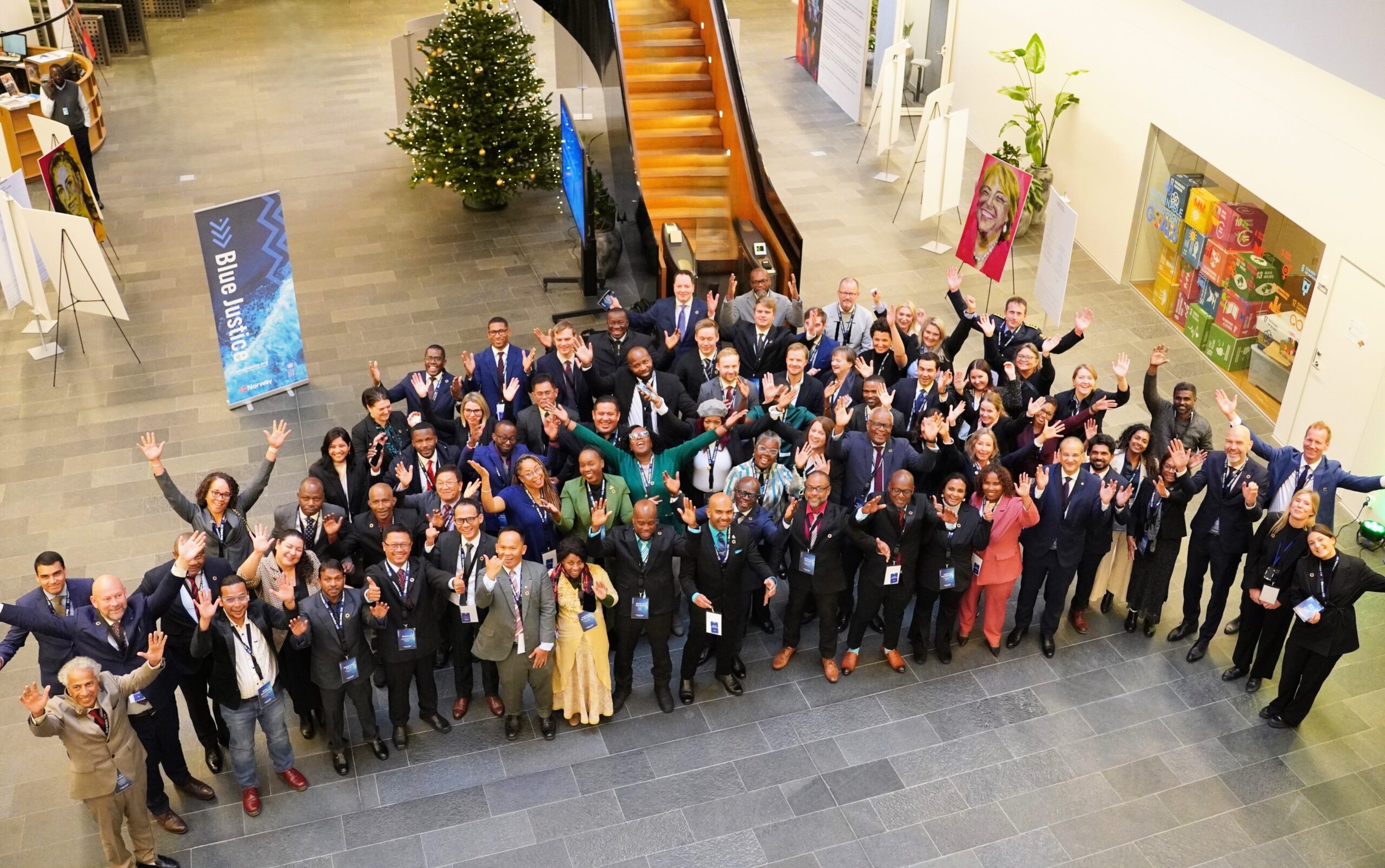
The Blue Justice conference in Copenhagen gathered more than ministers, experts and analysts. It gathered what Gunnar Stølsvik from the Blue Justice Secretariat later called “the electricity of humans” – the energy that emerges when people from different sectors, regions and institutions decide to work together on the same problem.
In Blue Justice, the shared challenge is not only illegal fishing, but a broader set of crimes and vulnerabilities that undermine a fair and sustainable blue economy. The conference showed that the most powerful response is not a new slogan, but practical cooperation between people who trust each other and share information across borders and sectors.
As of end 2025, 61 nations have endorsed the Copenhagen Declaration, representing about one third of the world’s coastal states. Behind that number lies a dense fabric of working-level relationships. Analysts in the tracking centre in Vardø, enforcement officers in Caribbean island states, prosecutors in West Africa and policy‑makers in Nordic capitals look at the same maps and share the same concern for coastal communities that depend on the sea.
Ministers and senior representatives from 28 of the 61 signatory countries to the Copenhagen Declaration used the conference to reaffirm their collective support for the declaration. For many of them, Blue Justice is where political commitments are translated into shared tools, regional hubs and concrete working relationships that can actually be used at sea and in court rooms.
Regional Hubs and Shared Ownership
The conference showed how regional hubs can make global ideas concrete. In the Nordic region, prime ministers have agreed that the region should become the world’s most sustainable and integrated by 2030. Unni Kløvestad from the Nordic Council of Ministers drew a clear line to Blue Justice:
– Blue Justice is a clear example of how regional engagement can drive global action, she said. – Our work to promote sustainability for our ocean and fisheries can only succeed if we at the same time ensure justice in management.
The Ocean as Shared Lifeblood
Several speakers described the ocean as a shared lifeline, not just a resource.
– The ocean is the lifeblood of our planet, and it is under immense pressure, Norwegian State Secretary Kristina Hansen said.
The same understanding ran through the conference. The ocean as something that connects large and small states, North and South, island nations and continental countries.
From the Caribbean, Sanya Compton, Programme Manager in the secretariat of the Caribbean Regional Fisheries Mechanism put it this way:
– Our Caribbean Sea is more than just a body of water. It is the economic and cultural lifeblood of our region. It feeds our families, supports our tourism sector, sustains coastal communities and provides livelihoods for hundreds of thousands of our citizens, she said.
In the Caribbean, Jamaica now hosts the world’s first regional Blue Justice hub. Compton explained how this works in practice:
– Jamaica serves as the regional Blue Justice hub for the Caribbean, fostering inter‑agency cooperation within and between Eastern Caribbean countries, she said.
She pointed to a digital forum after recent hurricanes as a very concrete expression of this cooperation:
– Following recent hurricanes, the Caribbean hub has hosted digital forums on cooperation in natural disasters and fisheries crime. These conversations help us support coastal communities when they are at their most vulnerable, Compton said.
Similar regional processes are under way in other parts of the world. Participants from Africa described cooperation within SADC and other regional structures, where joint risk analysis and shared platforms help states follow vessels as they move between zones. The message was consistent: regional cooperation builds trust, and trust makes it easier to act when something does not look right.
People at the Centre
Throughout the conference, speakers returned to the human dimension. Behind every satellite image is a person deciding what is relevant. Behind every legal reform is a civil servant drafting clauses and a parliament debating them. Behind every patrol and inspection there are inspectors who need training, equipment and support.
The Blue Justice Community has increasingly put these people at the centre.
– Blue Justice continues to focus on engaging operational personnel, those on the front lines, said Gunnar Stølsvik from the Blue Justice Secretariat. – Declarations are important, but they only matter if they change what people can do in their daily work.
User gatherings and regional workshops are therefore designed as much to build relationships as to showcase tools. When someone later needs help interpreting tracking data or preparing a case, they know who to contact.
Several speakers also underlined the importance of including coastal communities, workers’ organisations and industry in this work, so that fair and sustainable ocean governance is not only about discovering wrongdoing, but also about ensuring a level playing field for those who follow the rules.
Collective efforts determine success
In his update from the Blue Justice Eecretariat, Stølsvik put words to what many had felt during the conference:
– What really strikes me is the electricity of humans in this room, he said. – The sense that you are not alone with your challenges, that others recognise them, and that you can actually do something about them together.
He noted that technology and new treaties are important, but that the decisive factor lies in how people choose to use them together:
– Technologies to monitor and protect our oceans are advancing rapidly, but it is our collective efforts that will determine success. Blue Justice is, at its core, about people choosing cooperation over isolation, Stølsvik said.
From the outside, Blue Justice can look like a complex web of declarations, platforms, programmes and hubs. From the inside, it is first and foremost a network of people who are determined to protect the lifeblood of their societies: the ocean that provides food, jobs and connection.
The conference in Copenhagen was a reminder that when this network comes together – when the electricity of humans is allowed to flow across borders and sectors – cooperation becomes more than a word. It becomes a force that changes how we share information, how we make decisions and how we care for the ocean we all depend on.