
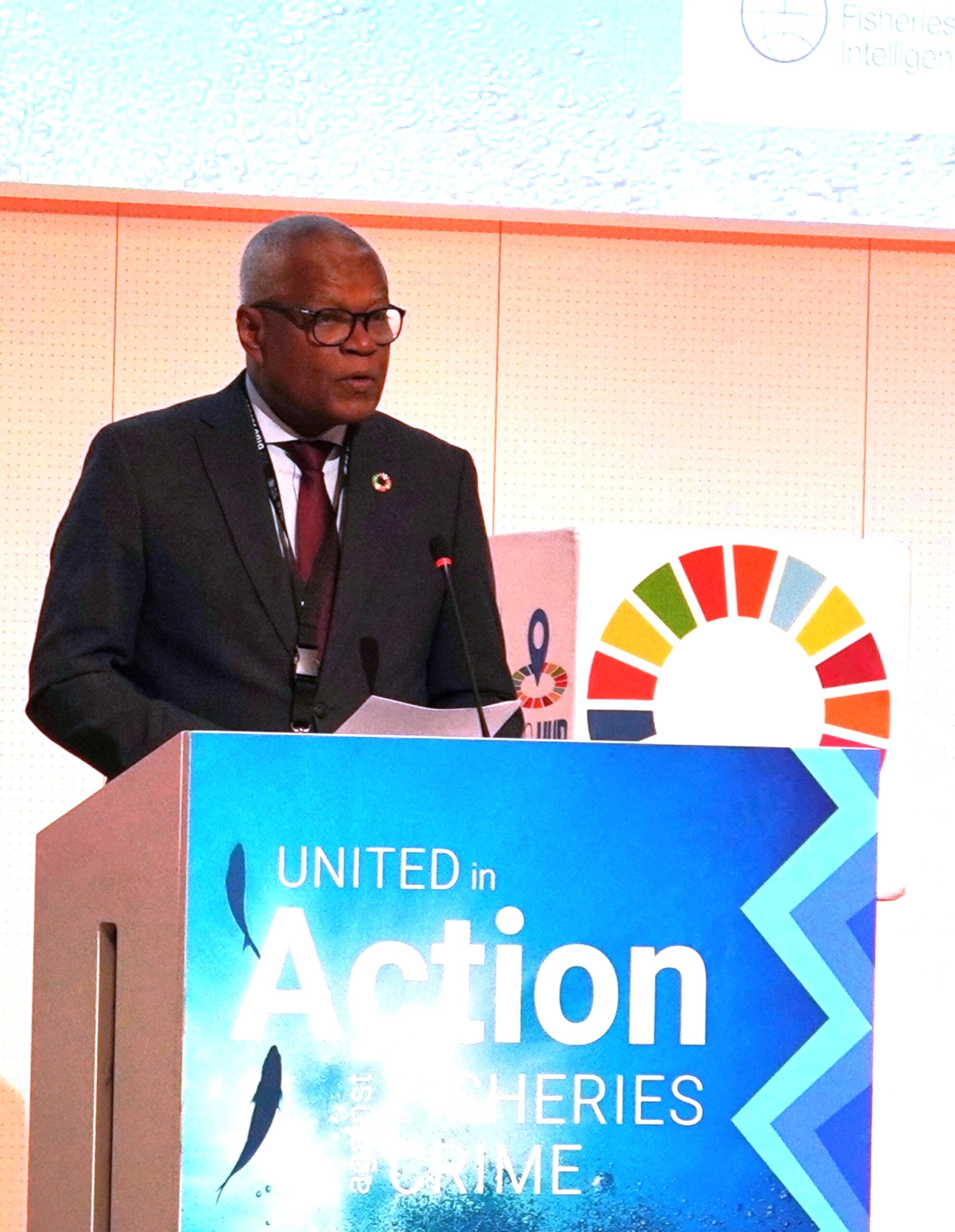
Cabo Verde is set to establish a Blue Justice MidAtlantic Blue Justice Hub. This will position the island nation as a central player in addressing illegal fishing and promoting maritime co-operation across the Mid-Atlantic region.
The archipelago nation is strategically located between Brazil, Africa and Europe. Cabo Verde is taking bold steps to address fisheries crime through regional leadership. Minister of the Sea, Jorge Pedro Maurício dos Santos, has been instrumental in driving this initiative forward.
– Cabo Verde is a country of the sea, with a very vast exclusive economic zone of 734.000 square kilometres of ocean. It is not a small country – it is a big country, a big ocean. This is why we are here at this conference, and I would like to reaffirm our strong commitment, on behalf of the government of Cabo Verde, to the principles that guide Blue Justice and the Copenhagen declaration, says dos Santos.
The initiative comes at a critical time for the region. Fisheries crime continues to threaten marine ecosystems. It also undermines the livelihoods of coastal communities across West Africa and beyond. Cabo Verde has recently felt the impacts of climate change, with severe storms affecting the archipelago.
Regional co-operation at the core
Dos Santos emphasises that tackling fisheries crime cannot be done in isolation. The new regional Blue Justice hub will serve as a platform for information sharing between countries across the Mid-Atlantic. It will build on existing partnerships.
– No country can face organised crime alone. It is a challenge that is collective and cooperative. Our legislative policies should be standardised, and they need joint actions. It is important to share intelligence and knowledge, coordinate surveillance and have coordinated actions to reduce crime, says dos Santos. Regional cooperation, he stresses, is a multiplier of capacities for participating states.
Cabo Verde already has a strong foundation for this work. Through COSMAR, the Coast Guard programme, and through cooperation with the maritime police and the General Inspector of Fisheries, Cabo Verde has developed what dos Santos describes as a positive ecosystem for maritime surveillance.
– Cabo Verde is strengthening its systems for surveillance of the sea and data control in the exclusive economic zone, which, as we said, is a very vast zone, he says. International partnerships further strengthen this capacity.
Looking to the Caribbean
Cabo Verde is now looking to learn from the Blue Justice Caribbean hub hosted by Jamaica. The country wants to draw lessons from similar initiatives elsewhere. Cabo Verde plans to invite the Secretary of the Caribbean hub to visit. It will also send a delegation to observe how that regional hub functions. Dos Santos is envisioning a regional conference in Cabo Verde in co-operation with Blue Justice.
– From there, we can set up the Secretariat and promote the hub, dos Santos outlines.
The regional Blue Justice hub forms part of Cabo Verde’s wider commitment to sustainable ocean governance. The country has established protected maritime zones to preserve marine life. Dos Santos highlights that Cabo Verde is at the forefront among nations preparing to ratify the UN High Seas Treaty on biodiversity beyond national jurisdiction.
Cabo Verde is also investing in green port infrastructure. The country is developing a programme to install onshore power supply systems at cruise ports and other facilities nationwide. This will help to reduce emissions from visiting vessels.
– We also promote blue financing to support responsible investments in maritime sectors, the blue ports and not only blue ports but also green ports, he says.
Building human capacity is equally central to this vision. Dos Santos stresses that training and skills development are essential for building up this ecosystem of maritime governance.
With a proven track record in maritime surveillance, Cabo Verde is well positioned to become a driving force in the regional efforts against fisheries crime in the Mid-Atlantic. The hub aims to strengthen regional co-operation. It will also help safeguard the livelihoods of fishing communities across the sub-region for generations to come.